Clock reliability is rarely about frequency accuracy alone. In both RTC and MCU designs, real-world performance depends on correct crystal selection, load matching, and noise control.
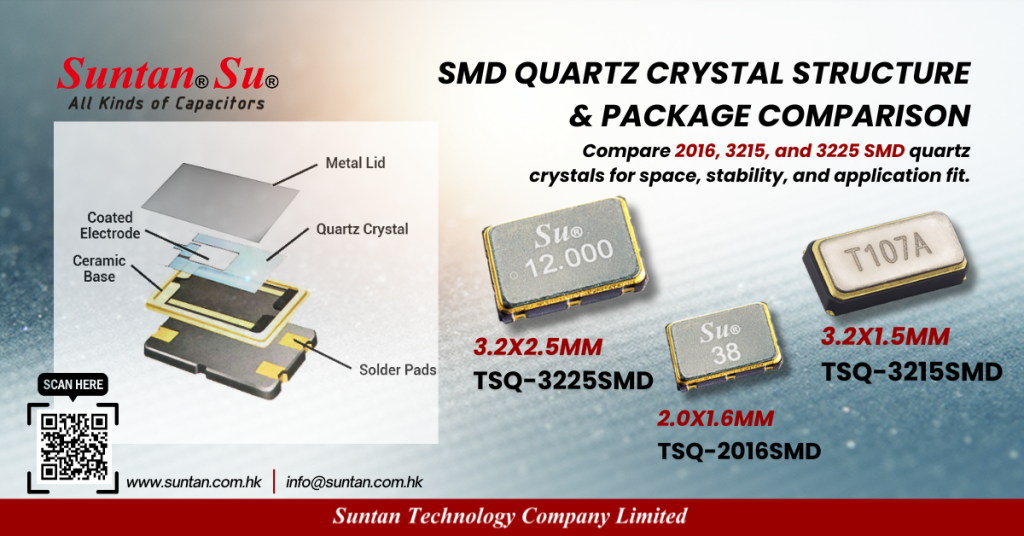
RTC Clock Design with SMD Crystals
RTC circuits prioritize:
- Low drive level compatibility
- Stable oscillation at microamp current levels
- Clean, symmetric PCB routing
Design errors typically include oversized load capacitors and unintended leakage paths. Either can stop oscillation entirely.
MCU Clock Design Considerations
For MCU clocks:
- Ensure crystal ESR matches MCU drive capability
- Verify startup margin across temperature
- Avoid routing clock traces near high-speed I/O
High-frequency crystals are more forgiving than RTC crystals—but not immune to poor grounding or long traces.
Selecting the Right Specification
Do not select by frequency alone. Confirm:
- Load capacitance (CL)
- ESR limits
- Frequency tolerance vs stability over temperature
- Package mechanical robustness for your assembly process
Skipping this step often leads to unnecessary redesigns late in the project.
Video Reference
For a visual walkthrough of crystal behavior and application context:
https://www.youtube.com/watch?v=u4rc26Fn6Kk
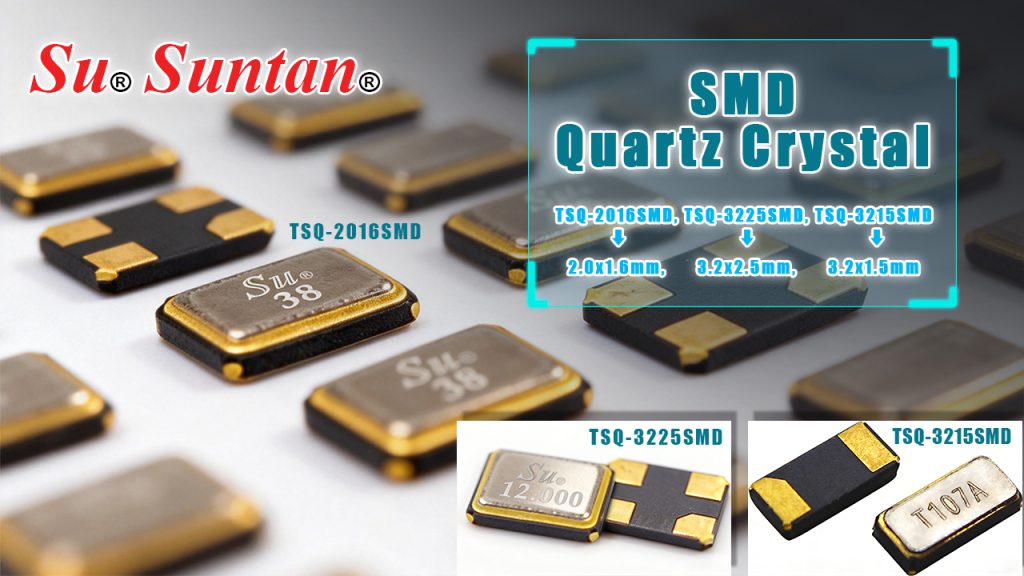
Product and Design Resources
- Quartz Crystal Series Overview
https://www.suntan.com.hk/Quartz-Crystal/?utm_source=wordpress&utm_medium=referral&utm_campaign=quartz_crystal_20260121 - TSQ-3225SMD / TSQ-2016SMD / TSQ-3215SMD
Links as above
Technical questions, sample requests, or design confirmation:
https://www.suntan.com.hk/contact.html?utm_source=wordpress&utm_medium=referral&utm_campaign=quartz_crystal_20260121
Need a quick package/layout sanity check?
Share your frequency, package preference (2016/3215/3225), target CL, and board constraints. We’ll suggest a practical footprint/layout direction.
Google Form (spec check / sample request):
https://forms.gle/CoRnAUMpi3EnxNvu9